Secrets and Pedophiles

I got you with that title, didn’t I? It’s bold, but this post isn’t about making a statement; it’s more about asking questions.

Last Friday, I found myself in a situation that got me thinking, and wondering what other people would think  or do if they had been in similar circumstances. Here is what happened.

I took my daughters to a local playground that is situated right across from a lake. The view is beautiful and it always feels peaceful to me there, so I take my girls whenever I can.

My daughters were the only children on the playground, although there were several other adults sitting at the picnic tables between the playground and the water. One of those people was an older man with long, sort of shaggy white hair and a baseball hat shading his face. He sat with his back to the lake, facing the playground and he was watching my kids the whole time we were there.

At least, that’s what it seemed like to me. It felt odd that he was looking in the direction of the playground and the street behind it instead of at the much more attractive view of the water. And whenever I looked in his direction, his head seemed to be turned toward my children. I was picking up child molester vibes and my mommy genes kicked in. I instinctively began hovering around my girls far more than I usually do. I showed obvious and exaggerated affection. I found myself thinking — this guy is going to know that these girls are loved, and watched, and protected and there is no way any creepy old men are going to lure them away from this mama bear.

It was a hot afternoon and I already felt uncomfortable with the situation so we didn’t stay at the playground for long. We headed out to Trader Joe’s to pick up some summer essentials, like ice cream and tortilla chips, and as they usually do, the girls were attracting attention from other shoppers. (They can be very cute together when they aren’t being rotten to each other.) As lined up to check out, my younger daughter was playing peek-a-boo with an older couple behind us, and then they were both smiling and blushing for the teenage boy working at the register.

As the young gentleman was ringing up my groceries, I overheard him say to my three-year-old, “Don’t tell your mother. It will be our secret.” I saw him smile and I smiled and laughed back, assuming that I had just missed what he had said before that. But then, maybe because I already had a case of the creeps, I thought to myself — that is exactly the kind of thing pedophiles say to the children they are abusing. Don’t tell. It’s our special secret. So I stopped smiling.

Some of you reading this might be thinking, holy cow, is this woman off her meds? These are perfectly normal social interactions. The guy at the park probably wasn’t even looking at your kids. Or maybe he was someone’s grandfather, missing his own grandkids and feeling closer to them by watching other small children play. Who knows? The poor kid at the check out was just trying to make a joke. There’s nothing to be seen here; nothing at all to worry about.

I was thinking the same things as I was reflecting on the events of the day and my own internal reaction to them. But I still couldn’t silence that nagging voice in the back of my mind, the one that seems always to be echoing the words, “constant vigilance!” Vigilance of my surroundings, yes, but also vigilance over myself as I react to the things that I see as representing potential danger for my children.

I want to instill a healthy sense of security in my children, but I also need them to know that the world isn’t always a safe place. So basically, I guess what I am saying is that I want them to not be afraid, but also to be afraid. Shouldn’t be too hard, right? And I know that my own reactions to life are the model they are following.

Since I actually am on much-needed (and moderately effective) anti-anxiety medication, trusting myself and the way I perceive the world as it affects my children is difficult.  I don’t want to overreact, because I don’t want my children to become fearful, but I also don’t want to laugh off circumstances that could lead them into real danger. The question of how to strike that balance between healthy confidence and healthy wariness is a challenging one for me.

So if you are another parent reading this post, I must as you this:  How have you have been able to nurture both of these qualities in your children? Have you faced circumstances similar to mine — where you perceived danger in a situation that could have been (and probably was) perfectly innocent? And how did you react if you did? And for those of you with older children — have you managed to teach them how to discern a safe situation from an unsafe situation? How? What do you suggest parents of young children do to help them navigate a world that can be both so wonderful and so terribly frightening?


Stupid Girls

I was flying solo last night while my husband was out of town, so I decided to take the kids to Chick Fil A for dinner. We ate and then the girls went to play in the playground area while I finished my dinner and cleaned up our table. After a few quiet minutes of peaceful time to myself, I was startled by the noise of my older daughter bursting through the playroom door. She rushed over to me, indignant, but also clearly suffering from hurt feelings.

“Mommy!” She shouted, “This boy just said that I am a stupid girl! He said I was singing my song wrong and that he didn’t want to play with me because I am just a STUPID GIRL!”

I was pretty angry. I followed her into the play area and had a little talk with the boy who had upset her so badly. I explained that what he said about my daughter was untrue and that it had hurt her feelings. I told him that he could help make it better by saying he was sorry. But even though his big brother was backing me up, the little boy was unrepentant.

So I turned the conversation over to my daughter instead and we started talking about all the things that are true about her.

“You’re not a stupid girl at all,” I told her. “You are a very smart girl. You are a smart person. And you are funny, and fun to be around, and really, really creative.”

“Yes,” she said, “and I am nice and imaginative and I got two prizes in camp today and I am a good big sister.”

But even though she knew all those things to be true, the insult the little boy had thrown at her still rankled. She couldn’t let it go. She brought it up repeatedly last night and it was still bothering her this morning.

And every time she mentioned what had happened, she always said the same thing: that she was upset because the boy had called her “a stupid girl.” She has been bullied before by another student in her class, and while the experience was very hurtful, she never dwelled on what the child from her school said to her as much as she did on being called a stupid girl.

***

My daughter had a new experience last night, and it was one that I always knew was coming. For the first time in her six years of life, she was exposed to the fact that there are people in this world who add the word “girl” to insults with the goal of making them more offensive.

The little boy who said those hurtful words was just that – a little boy. I know he probably had no real concept of what he was saying. Insults get bandied around playgrounds like balls at a tennis match and most of the time the words kids use to hurt each other are empty of any real meaning. This morning my younger daughter was mortally offended when my older daughter made eye contact with her and said “nah-nah nah-nah.” She sensed the intent to insult, even though the words her sister used were nonsense.

But still. There was something more to what that boy said, whether he was aware of it or not, and my daughter is perceptive enough to have felt that there was an extra barb in what he said.

Because it is undeniably true that in our social lexicon, the word girl – and all of its synonyms — are often used to convey criticism.

“You run like a girl.”

“You fight like a girl.”

“You kick like a girl, throw like a girl, hit like a girl.”

“You cry like a girl.”

These are not generally meant as compliments.

During football season, when people want to denigrate a member of the opposing team, they come up with memes of players in tutus and post them all over Facebook:

Oh, I get it. It’s the whole whiny little girl thing. Ha! Ha, ha. I’d forgotten how funny that is.

We imply that men are weak or cowardly by calling them pussies – and we’re not referring to cats. Men who are strong and imposing are “manly men,” while men who are more meek and subdued are “girly men.”

Even among women, when we say someone is “girly” we aren’t remarking on her strength of character, or her intelligence, or on the fact that she has the body parts required to build another human being. We are implying that she likes shopping, and pampering, and makeup, and pretty things.

The implied negative connotation we have connected with the word “girl” is prevalent enough that Always – that’s right, the feminine products company – has released a video highlighting just what people mean when they use the term “like a girl.” It’s worth watching.

***

My daughter got her first taste of this social phenomenon last night, but thankfully she still doesn’t understand just how deeply rooted it is in our culture. The truth will dawn on her eventually. My hope is that, when it does, she remembers this: that she is the only person who defines who she is. And that what it means to be a girl — or to do something like a girl — means nothing more or less than to be her best self and to do what comes naturally to her with courage and confidence.

And one more thing – you know the song my daughter was singing that the little boy found so annoying? It was my daughter’s cover of Twinkle, Twinkle Little Star. It went like this:

Twinkle, Twinkle, you’re my star
And I love just what you are.
Up above the world so high
Like a heart up in the sky.
Twinkle, Twinkle, you’re my star.
And I love just what you are.

When it comes to being her best self, I can’t help but think that she has a pretty good start.


Dance Like a Chicken and Fly

Over the last few weeks, I have been spending every Monday morning taking a Zumba class at our gym. I have to say that I am not a dancer, and I never have been a dancer.

All of the action shots my parents took of my during my childhood dance recitals show me off to the side, moving to my own rhythm, apparently oblivious to the fact that I was supposed to be participating along with several other girls in a routine we had spent the last six months practicing. When I was 7, my dance teacher politely told my parents that she didn’t think I was really getting anything out of my ballet and tap dancing experience and that it would probably be better for them to invest their money elsewhere. Unfortunately, remedial coordination classes don’t exist, so we added my failed dance career to my failed soccer career and limited my extra-curricular activities to Girl Scouts.

But these days everybody is doing Zumba and I figured that, if adults with no previous dance experience from countries all around the world can pick up the Zumba moves, then by God, so could I.

My first few classes were embarrassing. I spent the entire time trying to get my feet to do something — anything — that remotely resembled what the instructor was doing, and using vast amounts of concentration to ensure that I didn’t kick anyone or fall down. There were arm movements too, but that was so far beyond my capability that I just let them do whatever they had to do to keep me from falling into a heap on the arena floor.

But after a few classes, I began to feel a little more comfortable. My arm flapping became considerably less noticeable, and I stopped praying for the occasional breaks for running in place or squats that our instructor adds into the work out. I even managed to keep up when Claire, from Desperate English Housewife in America, subbed for our usual instructor and added in this twitchy, hip-shaking move that she made look totally sexy but which had me feeling like my hips, and only my hips, were having seizures.

I was becoming increasingly comfortable with the moves, and I had finally started to think that I was getting kind of, well, good at it. I was concentrating less and smiling more and at the end of the workout I was feeling almost as high as I do after a good run.

But then, summer camps began, and the basketball arena where the class is normally held was handed over to a bunch of sweaty kids. We were shuffled over to a much smaller studio, where there is an entire wall of mirrors.

My friends, they say the mirror don’t lie, and they are right. Watching myself do Zumba was like watching a train wreck. I didn’t want to see it, but I couldn’t stop looking, and the end result was horrifying.

You know that scene in Frozen, when the Duke of Weselton leads Anna off for a dance, and then proceeds to perform dance moves so ridiculous that it can only be comedy? That’s what I looked like. I mean, I was doing what everyone else was doing. At least, I was attempting to do what everyone else was doing, but my execution was significantly less controlled and coordinated. And while I am sure that everyone else was sweating too much to notice me, I noticed myself and it was weird.


But that doesn’t mean I’m going to stop taking the class. I’m not even going to stop watching myself look like a fool. Because although I felt like an idiot, I also got a lot of amusement out of the whole experience.

I think that one of the greatest gifts life can give you is the ability to laugh at yourself. When you can see the ridiculous in your own actions and find the humor in your own shortcomings, you are rewarded with an endless supply of entertainment. We all pave the roads of our lives with the stupid things we do. Laughing at them makes the going so much easier.

But more than that, when you can recognize and laugh at your own absurdities, you often end up having much more patience with the faults and foibles of others. You judge everyone less and you relax more. You become a better person without even trying.

So next Monday, you will find me at the gym in Studio 2, dancing like an overdrawn cartoon character with a smile on my monkey face.


Happy Independence Day

We started our Fourth of July celebrations early this morning here in the land north of our Nation’s capitol. We dressed up the kids and our wagon, and we marched in a community parade that has existed nearly as long as our city. (Which is to say, about 40 years. )
20140704-133102.jpg

20140704-133121.jpg

20140704-133131.jpg


The kids had fun until they turned on each other and me, but really, it isn’t a holiday until I start screaming at my kids about candy in front of a crowd of waving on-lookers.

I hope everyone here in the US of A enjoys a safe celebration of the day we signed for our freedom. And let’s not forget what it could otherwise have been here in our great nation:

Happy Independence Day, America!

Questions of Faith

Book2Last night, a neighbor of mine invited me to her house to participate in a group discussion led by author and activist Kelly Bean on her new book, “How to Be a Christian without Going to Church: The Unofficial Guide to Alternative Forms of Christian Community.”

Going into the event, I had no idea what to expect. I hadn’t read the book, and I was unsure of what I could contribute to the conversation.  But I was intrigued, because my neighbor happens to be a Christian pastor and the fact that she was hosting a discussion on a book that seemed, essentially, to serve as a guide for people who wish to leave the church without losing their faith excited my curiosity.

Also, the title of the book suggested an experiment in faith with results that were very different from my own personal experience. As I have said before on this blog, I am Catholic to my backbone. My Catholic identity is rooted in the deepest core of my soul, and I know this to be true because there were times in my life when I was disappointed enough in the Church that I tried tear it out of me. But as I explored other faith communities — and even tried for a time to live my faith without any institutional connections — I discovered that no matter what I did or where I went, I could not experience faith in any capacity without feeling the pull of its ties to my intrinsic Catholicism.

Kelly’s book is, essentially, the story of people who went through an experience similar to mine, but who ended up with a completely different spiritual result.

So I went to the gathering feeling curious and, as often happens when our minds are opened up to new thoughts, I came home feeling even more curious.  Because in discussing how people connect to a community of faith, our conversation touched on a topic that, I think, is of central importance to modern religion: the question of how we live our spirituality within the numerous layers of community that make up the fabric of our lives as individuals and, ultimately, as citizens of a broader world.

This is a question with many faces. Most basically, it asks people of faith, whether they are deeply connected to an established and structured religious organization or whether they are flying on their own wings, how they live their beliefs. Is our faith something internal, which provides us with hope or inspiration but which isn’t a part of our outward lives? Is it a ritual, or a routine, that shapes how we spend our time more than the person we are? Is it something we share with others by simply participating mutually in liturgy, or is it something that enables us to form powerful spiritual bonds with others?

But this question also forces us to consider what our spiritual life means in the more extensive context of our existence in this world. On the simplest level, does our faith make us better people? Does it empower us to live gently, in service to others? And more esoterically, how does it affect the way that we participate as citizens of our larger non-faith communities? In a heterogeneous world, how do our beliefs affect those who don’t share them? How do we know when the expression of our faith hurts others, and where do we draw the line between living our faith and living in a group in which there are those who feel that their freedoms are curtailed by our beliefs?

This may come as a shock, but I don’t have the answers to any of these questions. Many of them weren’t even formed in my mind until last night, and there are many more brewing beneath the surface. But I think reading Kelly’s book is a good way to start thinking about what is at the heart of our faith, what inspires us to celebrate it, and how we can be more aware of the way our faith communities affect both the individuals who comprise them and the greater world around them.

Ann Coulter Cracks Me Up

Like everyone else who has access to Google or a Facebook account, I have been regularly updated on the fact that there is a World Cup Event happening, and that the game being played is soccer. I can’t admit to being a true soccer fan myself, because I’m not much of a sports person in general.

But I grew up on the East Coast and in our mid-Atlantic region soccer is pretty popular, especially in schools and universities. As a professional sport, of course, it is nowhere near as popular as football or baseball, but I would say that its fan base is about as strong as those of our local pro hockey and basketball teams. And while it may not have the same cultural significance as football or baseball, it certainly has always been considered a legitimate sport that is played by legitimate Americans.

According to Ann Coulter, however, soccer is not only a fake sport, but it is un-American, too.

I found out about Coulter’s “unique” beliefs about this globally-beloved “non-sport” when I saw a headline quoting her proclamation that “No American whose great-grandfather was born here is watching soccer.” Well, I thought. She is wrong there! My husband has been keeping up with the World Cup games and HIS ancestors have been here since before the civil war. Not only that, but they were so historically significant in the deep south that there is a building named after them in Meridian, Mississippi. That is just about as American as you can get.

But then I realized that what she probably meant to write was “no American whose White, Anglo-Saxon, Protestant great-grandfather was born here is watching soccer.” And my husband’s German-Jewish ancestors most certainly do not fall into that category.

But that’s OK. I understand. We can all make mistakes in the clarity of our writing. I am sure she would never want to insinuate that she has a limited definition of what a true American is.

Of course, after reading this headline, I had to check out the article itself. You can find it here in all its glory.

Now I have to admit that normally, I find Ann Coulter so utterly obnoxious that I would rather be tied to a kitchen chair and forced to watch Barney while my kids whined for a snack and my husband grilled me about what, exactly, I spent $67.50 on when I went to Target for bread and jelly than to read anything she has written. But this time I felt compelled to investigate.

Because instead of finding her statement to be bigoted and offensive, I just thought it was so idiotic — and so obviously untrue — that it was laughable. And that is when I realized that Ann Coulter is actually hilarious.

The things she says are so glaringly ludicrous that, if she isn’t writing satire or, more likely, just running her mouth off for attention, then she has to be either genuinely mentally ill, on psychedelic drugs, or just plain unintelligent. I suppose it could also be a combination of several of those things. Or, she could just be a jerk. I don’t know. Whatever the case may be, I have decided that she really doesn’t make me angry anymore. She just makes me laugh.

Consider this statement, which is number 4 in her outline of reasons why soccer is neither a sport nor American: “The prospect of either personal humiliation or major injury is required to count as a sport.” Right. To simplify things, I made a graph that we can all use to determine where on the “legitimate sport spectrum” any given so-called “sport” will lie.

Graph of the "Legitimate Sport Spectrum"

Graph of the “Legitimate Sport Spectrum”

She goes on to say, “Baseball and basketball present a constant threat of personal disgrace. In hockey, there are three or four fights a game — and it’s not a stroll on beach to be on ice with a puck flying around at 100 miles per hour. After a football game, ambulances carry off the wounded. After a soccer game, every player gets a ribbon and a juice box.”

I can see her point. I mean, who wants to waste their time on on any activity that doesn’t result in the crunching of bones or the crushing of a grown man’s soul?

And then there is number 5 on her list: “You can’t use your hands in soccer. (Thus eliminating the danger of having to catch a fly ball.) What sets man apart from the lesser beasts, besides a soul, is that we have opposable thumbs. Our hands can hold things. Here’s a great idea: Let’s create a game where you’re not allowed to use them!”

We have THUMBS and BY GOD we will USE them lest we offend the Lord and our Founding Fathers.

I enjoyed number 8, too: “Soccer is like the metric system, which liberals also adore because it’s European. Naturally, the metric system emerged from the French Revolution, during the brief intervals when they weren’t committing mass murder by guillotine…Liberals get angry and tell us that the metric system is more “rational” than the measurements everyone understands. This is ridiculous. An inch is the width of a man’s thumb, a foot the length of his foot, a yard the length of his belt. That’s easy to visualize.”

Does anyone else get the feeling that Ann Coulter has a thing about thumbs?

I feel you here, Ann. Soccer is ridiculous because the metric system is incomprehensible. And I totally agree with you. The next  time you pick up your meds, and I know you’re on at least a few, make sure the formulas are measured using the cubed width of the pharmacists thumb.  It’s much easier to visualize, and cubic centimeters are communist anyway.

But best of all is number 7, in which Ann’s true grievance with soccer comes shining through: “It’s foreign.” And the fact that our poor, unwilling American psyches are being bombarded with images and information about this blatantly anti-American, moral-destroying non-sport can all be brought home to… Liberals and Immigrants! Or more specifically, to Teddy Kennedy and his 1965 immigration policy, which has resulted in hoards of post-1965 un-American American citizens who enjoy soccer. Because, as Ann says, ” I promise you: No American whose great-grandfather was born here is watching soccer. One can only hope that, in addition to learning English, these new Americans will drop their soccer fetish with time.”

I’m going to have to disagree with Ann on this one. I hope that America’s soccer fandom grows to epic proportions. Not because I love soccer, but because, even though I’m an anti-gun, bleeding heart, “perpetually nervous mommy” with pacifist leanings, I kind of want to see Ann Coulter implode with rage over the fact that people in America like a sport that people in other countries like too.

Distractions

Or, It’s been a long time, been a long time, been a long lonely, lonely, lonely, lonely, lonely ti-ime.

So, it’s been awhile. In fact, I think this is the longest I’ve gone without posting since I started this blog nearly a year ago. It’s not as though I have hoards of fans who have been desperately awaiting another post from me, only to be disappointed again and again, slowly losing their will to live with each passing day of my absence from the world wide web. There is a good chance that I am the only person who has even noticed I haven’t posted in over a month. But even if no one else did,  I happened to be very aware of my own absence, so here I am again, being present for myself, if that makes any sense at all.

In case my title didn’t make it obvious, the last month has been host to a multitude of distractions. First, there was the basement, where we discovered a leak and an increasingly strong musty, moldy smell. So we hired someone to come and check things out.

Hiring a basement waterproofing specialist was the obvious thing to do, but it resulted in a month of guilt, emotional turmoil, and marital strife. Because the guy who came to asses the situation in our basement was a Salesman who homed right in on me, my allergies, and my mother bear instincts, to the tune of a grand, “highly discounted because I feel so incredibly bad for you,” total of $16,000.

I almost escaped his sales pitch. He gave his initial spiel to my husband, and was about  to leave, contract unsigned, when I came downstairs coughing.

“You have allergies, don’t you?” he said to me. “They are terrible; I had them awful when I was a kid. I feel for you, I really do.”

And that was all I needed. Everyone else in my family had lost whatever sympathy they might have had for me and my sniffling, coughing, and red, watery eyes back in March. But here, finally, was someone who noticed my misery. Someone who cared. Someone who wanted to make me feel better.

The Basement Guy went on to tell me that, basically, our basement was slowly killing me. According to him, we have a Mold Situation. He asked if our children had been sick a lot this year — they had — and suggested that it was our basement causing all their illnesses as well.  The mold could be toxic, he told me, and, as it was so conscientious to remind me.

Also, he said, we have a crack. It could be nothing, but it could be something, too. According to him, this crack could gradually compromise the structural integrity of our house. Moreover, he said, the foundation was made of 1970’s concrete blocks, which, he said, are like the worst concrete blocks ever made in the history of concrete and that the ground water surrounding them was causing them to sweat their little concrete hearts out, creating an excessively humid environment. Ultimately, our basement should probably never even have been built and if we could, he would suggest that we move somewhere else.

Except that we won’t be moving anywhere else any time soon for anything less than a monumental reason. We have 14 years left on our mortgage. And he knew this because my husband told him so at the beginning of the consultation.

So, then, the only choice we have, according to him, was to close off our basement — which is the kids’ playroom, destroy all of the stuffed animals and dress up clothes we have stored down there, bleach everything else, and then have him and his company open up our floors (with the new carpet), remove and replace our entire existing drainage system, tear down our drywall to  install some sort of NASA-engineered, space-age wall reinforcements, replace our sump pump, and install a $2,000, hospital grade, negative air system.

He made me promise not to let my kids play in the basement until his company could come and deal with the problem, and in my presence called the central office to see how soon he could schedule work on our “emergency situation.”

I, of course, was sold. He had me at the word “allergies”.

My husband, however, was not. He is the skeptic of the family, and he was not convinced. He suggested that I had been played by this guy, and that he was highly over exaggerating the case.

In hindsight, it is a good thing that my husband insisted on taking a few steps back and having more contractors come and look at our basement. At the moment, however, I was just a smidgen angry at him. These were OUR CHILDREN, we were talking about, after all. So there were discussions, and words were spoken, and we were all very stressed. And we still are because it’s been a month and, after having 4 companies come to evaluate the situation, we have yet to get one consistent response. Well, I guess I can’t say that. They all agreed that we will be spending lots of money in the near future. So at least we have that, right?

In the midst of all this, my two-year-old turned three and my five-year-old turned six. The little one finished her first year of preschool, and the big one graduated from Kindergarten and we had about one thousand different parties and events and meetings to attend.

The Little Birthday Girl

The Little Birthday Girl

IMG_4830

The Big Birthday Girl

And I experienced my yearly bout of nostalgia, when, with watery eyes, I watch each of my girls growing stronger and more independent while I try to remember exactly what it felt like to hold them with one arm, their heads on my chest, their little bottoms curved out, and their feet barely touching my lap.

So it’s been awhile. It’s been stressful and a little emotional and very, very busy, but I guess it’s really just been life.


A Recipe

I learned a new recipe today. It is one I will never try again, and I urge you all never to attempt it yourselves. It is a recipe for a supremely cranky toddler.

First, you start with a 2-almost-3-year old who is at the height of that age’s notorious crotchety phase. Then you add a trip to Target followed by an hour of swim lessons and pool time. After this, you throw in a very disappointing lunch that does not include nuggets and which happens at home instead of at Chick-Fil-A. Then you commit the outrage of trying to get the toddler to take a nap, which she will categorically refuse to do.

Up to this point, you could still salvage your sloppy creation of a day by making wise choices. You will have to look at someone else’s blog to figure out how to do that, because wise choices are not a part of my repertoire.

Your next step is to take the tired, non-napping toddler who has had a lunch of air and pool water on more errands (because you have THINGS TO DO and if you aren’t going to get FIVE MINUTES to yourself, you might as well get SOMETHING useful done.)

So you go  to Staples and Trader Joe’s and you are amazed by how well the toddler has held herself together and you start to think that maybe your day isn’t totally screwed after all.

You get home, with five minutes to unload the car before you have to pick up your other child from school and you discover that… your toddler is asleep. You unload the car, drive to the elementary school, unload the sleeping toddler into a stroller, haul her over a muddy field, get her sister, haul her back over the muddy field,  reload her into the car and drive both your children to the dentist.

You unload your still-sleeping toddler, a child who has never in her life, not even as a newborn, slept through so many transitions, and carry her into the dentist’s office. Where she wakes up right as the hygienist is preparing to clean her teeth.

Need I say more? I mean, falling asleep and waking up at the dentist’s is pretty much a nightmare experience for anyone, even more so for a two-year-old who is at any given moment on the verge of an emotional collapse. And boy-oh-boy is she collapsing. I am actually writing with her on my lap crying because she doesn’t have the accordion her sister made out of a toilet paper roll in her hands.

I guess the best I can hope for now is an early bedtime.

20140514-175347.jpg

20140514-175403.jpg

20140514-175412.jpg

Hasta la Vista, Tio Bobbo

Three years ago today, when I was exactly 37 weeks pregnant with my second daughter, I stood together with my cousins and my aunt, and we held my uncle’s hand as he slowly passed away.

Maybe one day I will be able to describe what it feels like to help someone you love dearly to leave this world when you are on the cusp of ushering another soul into it. It’s been three years since it happened to me, and I still can’t find the words I need. All I can say is that, before the moment of my uncle’s death, I had both seen life end and brought life forth and neither of those experiences touched me as profoundly, as radically, as that moment did.

It was cancer that killed my uncle. It seems like it’s always cancer in my family. Before it took my uncle, it had already taken my mother, my grandfather, and my other uncle. Cancer stalked and killed four-fifths of my mother’s family. That may sound melodramatic, but it feels true. Cancer took my husband’s mother too, and his uncle and a grandmother as well. It has been such a huge part of my life, that sometimes I forget I am not a survivor of the disease myself.

Or maybe I am? I am a survivor of those who have fought the battle and been overcome by a disease that seems never to pull its punches. Really, so is anyone who has lived through even one day of the fear and the pain; the chemo and the radiation; the treatments that are even worse than the disease, whether they won or lost that final battle. My whole family, then, both the living and the dead, are cancer survivors.

So this post is for them all, because I love them. But mostly it’s for my Uncle Bob, the best uncle a girl could hope for and one of the finest humans I have ever known.

Hasta La Vista, Tio Bobbo

Hasta La Vista, Tio Bobbo


Midlife Contentment

Last week I turned 35. I wanted to write about it then, but I have been too busy doing things that 35 year old moms do, like chaperoning trips to the zoo, going to PTA meetings, and selling flowers for teacher appreciation week. It’s a gangsta life, people.

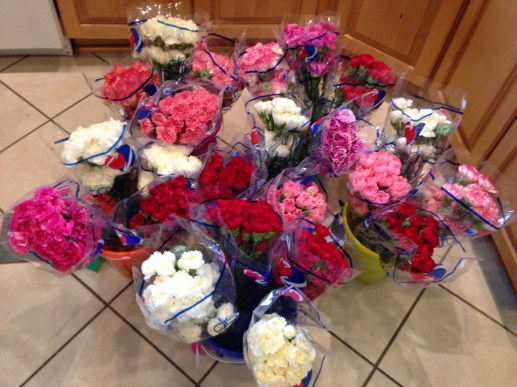
I went all kinds of hardcore  on the flower people when I realized they have me 575 flowers instead of 600!

I went all sorts of hardcore when the flower people gave me 575 carnations instead of 600.

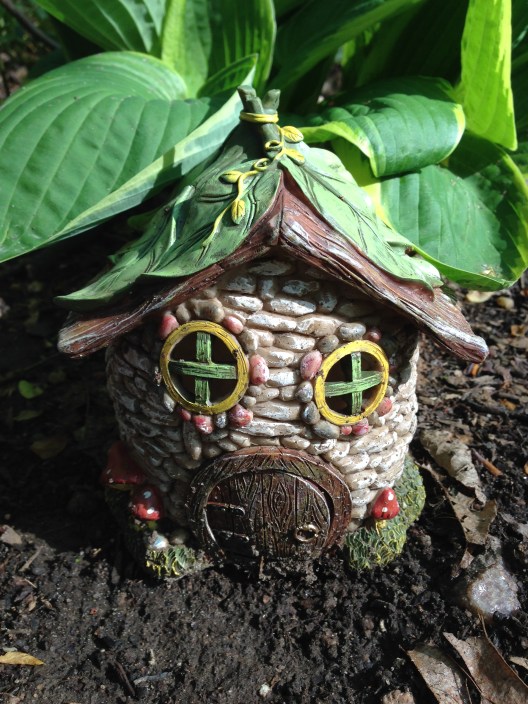
But that doesn’t mean I didn’t take some time to celebrate. The night before my birthday, when my two-year-old was refusing to sleep (because otherwise, I’d have been in bed by 8 pm), I spent some time surfing the net on my iDevice, trolling some of my favorite sites. Like Michaels, and Kohls. I even splurged on something I’ve been wanting for a long time… a twee little castle for our fairy garden.

photo (14)

On sale for $9.99 at Joann’s, with $1.50 flat shipping. Who could resist?

And my celebrations weren’t limited to online shopping. The day after my birthday, I dragged my husband and daughter to the mall. I had a coupon for $10 off any $10+ purchase at JC Penney, and another one for $10 off any $25 purchase. That’s like money in your pocket!

So while my husband was taking the kid to ride the carousel, I was stalking the aisles of Penney’s, looking for the best way to maximize my coupon savings.

I saw this hot little number early in my scouting adventure, and I thought about buying it, just to be ironic. But then I realized that it was a junior sized cut, and that its snug contouring of the remnants of my mummy tummy would only look pathetic.

rebel

A Rebel Youth — who shops at Penney’s.

I finally ended up in the Jewelry department, checking out the 70+% off sterling silver collection, which felt like destiny. I walked out of the store with over $200 worth of silver earrings for a grand total of $18. It was a rhapsodic moment.

Hitting the age of 35 doesn’t carry with it any of the anxious anticipation or exuberance that distinguish the milestone birthdays of our younger years. In fact, I had expected it to be a difficult birthday, much like 30 was for me five years ago.

Oddly enough, it wasn’t. It just sort of happened, and I was content. And the thing is, that at 35, I can appreciate contentment for what it is – one of the rarest and most valuable experiences we can ever hope to have.