They Love Us Too

Last week, a dear friend of mine shared a beautiful tribute to her father, who passed away several months after her wedding, shortly after she became pregnant with her first child. She wrote:

“Today, on what would have been my dad’s 74th birthday, I remember the song I picked for the father/daughter dance at my wedding: Forever Young, by Bob Dylan.  I shared the song with my dad a couple of months before the wedding, and when he heard it for the first time, he teared up.  He understood why I chose it – not only is it a wish from him for me, but also from me for him.  We practiced dancing a little bit that day in my parents’ living room, and looking back I’m so very happy that we did.  By the time the wedding day rolled around, cancer radiation treatment had left my dad unable to stand without support.  Dad and I didn’t get to dance at my wedding, and a little part of me is sad when I think about that, but more so I am grateful that he was able to be there at all.
So, Dad, this one’s for you. 

I thought her post was profoundly touching, and not just because I knew her father — who was a good, kind, immensely intelligent man — or because I know how it feels to regret what you could not do with a beloved parent who has been beaten down by cancer.

What moved me the most was what she said about the song she chose for her father/daughter wedding dance — that the words of Forever Young were not just a wish from him to her, but also from her to him.

Bob Dylan’s Forever Young is a song whose lyrics can bring even the most unsentimental parent to tears. The first stanza alone has everything you need to feel both heart-swellingly hopeful about your child’s future and crushingly nostalgic about the childhood she will inevitably leave behind:

May God bless and keep you always.
May your wishes all come true.
May you always do for others,
And let others do for you.
May you build a ladder to the stars,
And climb on every rung. May you stay forever young.

Of course these are the things every parent wants for her children.  We want them to follow their dreams, and to be righteous and brave. We want them to be loved, and to know truth, and to find joy. We want them to be young, forever. We want them to have everything in the world that is good.

But my friend took this point further and reminded me that these are the same things our children want for us, their parents.

I have written before that the best thing we can do for our children is to be there, beside them, as they walk through life. But it is also important, for us and for them, to remember that —  behind the tantrums and the defiance and the smug know-it-all-ism of their early years — they both want and need their parents to be content and fulfilled. They want us to be strong, and healthy, and as young as they remember us to be. They want good things for us, too.

Our children, particularly when they are young, don’t often show us that our welfare matters to them. I’m pretty sure that if you asked my three-year-old, she would say that her greatest hope for me is that I forever provide her with goldfish crackers. Or that I forget the word “nap.”  My five-year-old would like me to concede with prejudice that I am not, in fact, the boss of her. I feel certain they would neither acknowledge nor express any lofty aspirations for me. But I think our children feel a need for our happiness nevertheless.

* * *

For the last few months, I have been battling one rough winter illness after another. I had antibiotic resistant strep throat for four weeks back in December, which led me to discover some minor, though temporarily worrisome, heart problems. Then in January, I picked up the norovirus at Chuck E. Cheese, which knocked me out for eight solid days. I am currently winding up another course of antibiotics for a sinus/ear infection and bronchitis. It hasn’t been an easy winter, and I haven’t been my usual self.

While all this was going on, I noticed that my five-year-old’s behavior at home had been getting increasingly worse. She was being contrary, oppositional, and having massive meltdowns at the least provocation. I was overwhelmed, and I couldn’t figure out why she had picked the time when I was at my weakest to bring out her worst behavior.

But eventually it dawned on me. She was reacting to my illnesses. It was because I was at my weakest that her behavior was it its worst. I wasn’t well and she was worried about me. I wouldn’t have argued if she had shown her concern in a less challenging way, but that’s how my girl rolls — when life pushes her over her limits, she pushes right back at life.

* * *

Our kids love us and need us to be there for them. They also want, and need, for us to be well and happy*. Our wellbeing affects them — but it also matters to them. They can’t find their own contentment if we haven’t found ours.

And if we do our job right, one day, our children will want everything for us that we want for them. That is a big and beautiful thought, and I am so thankful to my friend for reminding me that the love and concern we parents feel for our children is reciprocated, and powerfully so.

This one’s for you, CHW. And yes, Dad, this is my way of saying I love you, too.

From the Forever Young Book, by Bob Dylan and Paul Rogers

From the Forever Young Book, by Bob Dylan and Paul Rogers

*Read more about our right to be well and happy at These Walls Blog, by my friend Julie.

Religious “Liberties”

Today I went to pick up some tacos for dinner. When I got home, I saw that they had given me flour tortillas instead of corn tortillas. Normally this wouldn’t cause a sane person to find herself on the verge of a meltdown. But I have Celiac disease and I can’t eat flour tortillas. I also can’t eat the stuff inside of the tortilla, or anything else that was within touching distance of the tortilla. So no taco, beans, and rice platter for me tonight.

Instead, I popped some gluten-free chicken nuggets into the oven and logged on to read the news while I waited for them to cook. I was feeling pretty flammable to start with, so it’s not surprising that when I read this article about the Arizona legislation that “would allow business owners, as long as they assert their religious beliefs, to deny service to gay and lesbian customers,” I started to feel a rant coming on.

Things are changing in the 21st century, and there is an increasing number of issues in which the conflicts between secular demands and religious beliefs constitute a legitimate political debate. We are being forced to tackle contentious questions about how far our religious beliefs can go in dictating the way we implement laws, and how far those laws can go before they encroach on our freedom to practice our religion according to its particular theology. These are serious questions. But they have nothing to do with this piece of legislation coming out of Arizona.

I am going to go out on a limb and assume that the “religious beliefs” lawmakers are referring to are of the Christian variety. I have been a Christian since August of 1979 when I was baptized into the Catholic Church.  I went to Catholic schools from Kindergarten through graduate school, with the exception of the four years I spent in public high school.

I’ve learned a fair amount about the basics of what we believe, but I don’t know everything. Nevertheless,  there is one thing I can say with confidence: nowhere in our canon of beliefs does it say that we can’t sell stuff to gay people. There is no verse in the Bible that I am aware of in which Jesus or any of the major biblical players pronounce that “thou mayest not sell thy meatloaf platter to a man who lieth with another man.”

Seeking to establish legislation that couches discrimination in terms of religious freedom is really just an attempt to assert the righteousness of a certain kind of intolerance. There is no doctrinal basis for refusing service to anyone for any reason. It is self-justification, pure and simple.

The only religious liberty that is relevant to this legislation are the liberties these lawmakers are taking with their faith — with my faith. And what they have shown us is that they are willing to commandeer a faith based on love and redemption and sacrifice it to the alter of their bigotry.

A Tale in Eight Words

There is a legend about Ernest Hemingway, in which the author bets a group of his fellow writers that he can compose an entire short story in six words. No one believes him, so he ups the ante to $10 from everyone who says he can’t. And then he writes the following words on a napkin:

“For Sale: Baby shoes. Never worn.”

We can assume that Hemingway won his bet. In the context of the time period, these words — by this particular writer — require only a fragment of imagination to put together an emotionally charged story of hopeful anticipation, heartbreaking loss, and the moving forward of the human spirit. The words are simple; the tale they evoke is profound.

Over the past week, another simple sentence has been in my mind:

“A gunman opened fire in a crowded mall.” 

In just eight words, within the context of our own culture, we have another story that is chillingly complete. We don’t need any imagination at all to know that terror and violence followed. That people were hurt in body and in mind and lives were lost. That there were heroes there too, and that strangers helped one another to survive. 

Those eight words are enough to tell us that a community was changed, forever. And they have been in my mind because this time, it was my community that was changed. 

Ten days ago, a disturbed young man came to the Mall in Columbia, less than two miles from my own home. He carried with him a bag that contained a gun, ammunition, and crude explosive devices. He opened fire in one of the most crowded areas of the mall, during one of the busiest times of the week. He killed two people, and caused injury to several others, before shooting himself. And all of this happened in front of hundreds of people — children, teens, and adults — who were living out their daily lives in a location that could reasonably be considered safe.

It’s hard to express how surreal it is to see your own neighborhood on national news as the scene of what appears to be yet another mass shooting. It is surreal, but not entirely shocking — I’m realistic (and anxiety-ridden) enough to know that a gunman shooting in a crowd can happen anywhere. Part of me was waiting for something like this to happen somewhere close by. Our mall is the ideal location for this kind of violence. But way you feel when you actually witness a shooting event unfold in your own community — with the knowledge that your own friends and neighbors are among those caught in the fray — is inexplicable.

Compared to other similar shootings, we got lucky — “only” two lives were lost. From what I have read in the news, it seems like our shooter intended to kill more people, but for some reason we will never know, he chose to stop the madness and kill himself instead. I’d like to think that he saw the horror he had caused, and just couldn’t cause any more. I’d like to think — and I do — that he felt remorse.

In the aftermath of a tragedy like the one that happened here we are faced with a sea of questions that come crashing in like waves. The most insistent of these questions is also the most contentious: How do we stop this from happening again? I wish I could answer this. Or, perhaps more accurately, I wish that we as a society could come together to answer this question. Because I do have my own answers, and I feel strongly about them. But for every person who agrees with me, there is another person who passionately disagrees with me. And it feels like none of us wants to listen to anyone else, with the result that instead of stopping the hatred and violence, we are fueling it instead.

But there is another, much smaller question, that faces my own community. And this question is: Do the events of January 25, 2014 define who we are?

I think they do.

People often use the word “overcome” to describe struggling successfully through adversity. But I won’t. Because when I think of someone overcoming something,  I envision an obstacle being climbed and left behind. We overcome the bumps in the road that try to stop our progress: injuries, illnesses, setbacks in our careers.

We don’t overcome hardship: we toil through it, absorbing it as we go, until it becomes a part of us. We weather it and survive it. Survival sounds like a pathetic goal, but it isn’t. Surviving is the most powerful kind of living. And when we survive adversity, we can never leave that adversity behind — because as we were mucking through, we were shaping our spirit. We are changed, forever, and I would argue, for the better.

IMG_3722

My lovely little city is an idyllic place to live. Our schools are excellent. We have hundreds of miles of woodland pathways that are trailed by rivers and streams. From my own home, I can run to three different lakes, where I can see deer and blue heron and geese and ducks and tiny little turtles and frogs. In the summertime, there are musicians, and dance instructions, and family movies at the large lake behind the mall. There are free concerts at one of our several truly beautiful local parks. I chose to live here because I didn’t want to live anywhere else. I love my life here.

But we are now a lovely little city where a gunman opened fire in a crowded mall. Those eight words have changed us forever. A tragedy of this magnitude must leave its scar. The lives of two young people were taken from us; we can never be the same again.

We are changed forever in another way, too. Because the events of that day brought out a part of our community that we had never seen before — a part that was always there, but whose fine edges were etched deeper through survival.

We  now know that we are a community that comes together in a crisis. We know that we can trust our emergency system — from the dispatchers to the first responders to the crime scene investigators — to do its job and to do it well.

 Our police arrived within two minutes of the first call. Dispatchers calmly talked people through their fear and advised them on what to do to stay safe. Stories from those who were in the mall at the time of  the shooting show acts of heroism and compassion from everyone who was there. Shoppers helped and comforted one another. Mall employees almost universally jumped in to help bring people to safety. They provided shelter and shared their food and helped entertain the children.

And we were taking care of those of us who weren’t there too. Within minutes of the first 911 call to the mall, I received a message from a dispatcher friend telling me to stay away. Seconds later, a friend who was at the mall with her young daughter posted the same message on Facebook. And within a half an hour, I saw more posts, e-mails, and text messages from people checking in on me and others than I could count. I have never been more proud to be a part of any community than I was that day.

We could have heard a story about mass chaos, about patrons crushing each other to get to safety and employees abandoning their posts to barricade themselves in the offices or backrooms of their businesses. We could have heard about inefficiencies in our emergency system or inadequacy among the officers who responded. But that’s not what happened. People shone.

A tale can be told in eight simple words. Lives can be lost, hearts can be broken, and a community can be permanently changed. But  of course we know that there is more to the story, more than can ever be put into words. My community has lived this story, and we will continue to live this story for as long as people can remember it. We won’t overcome it, but we will survive it. We will shine even more brightly because of the scars.

I still don’t want to live anywhere else in the world.

* * *

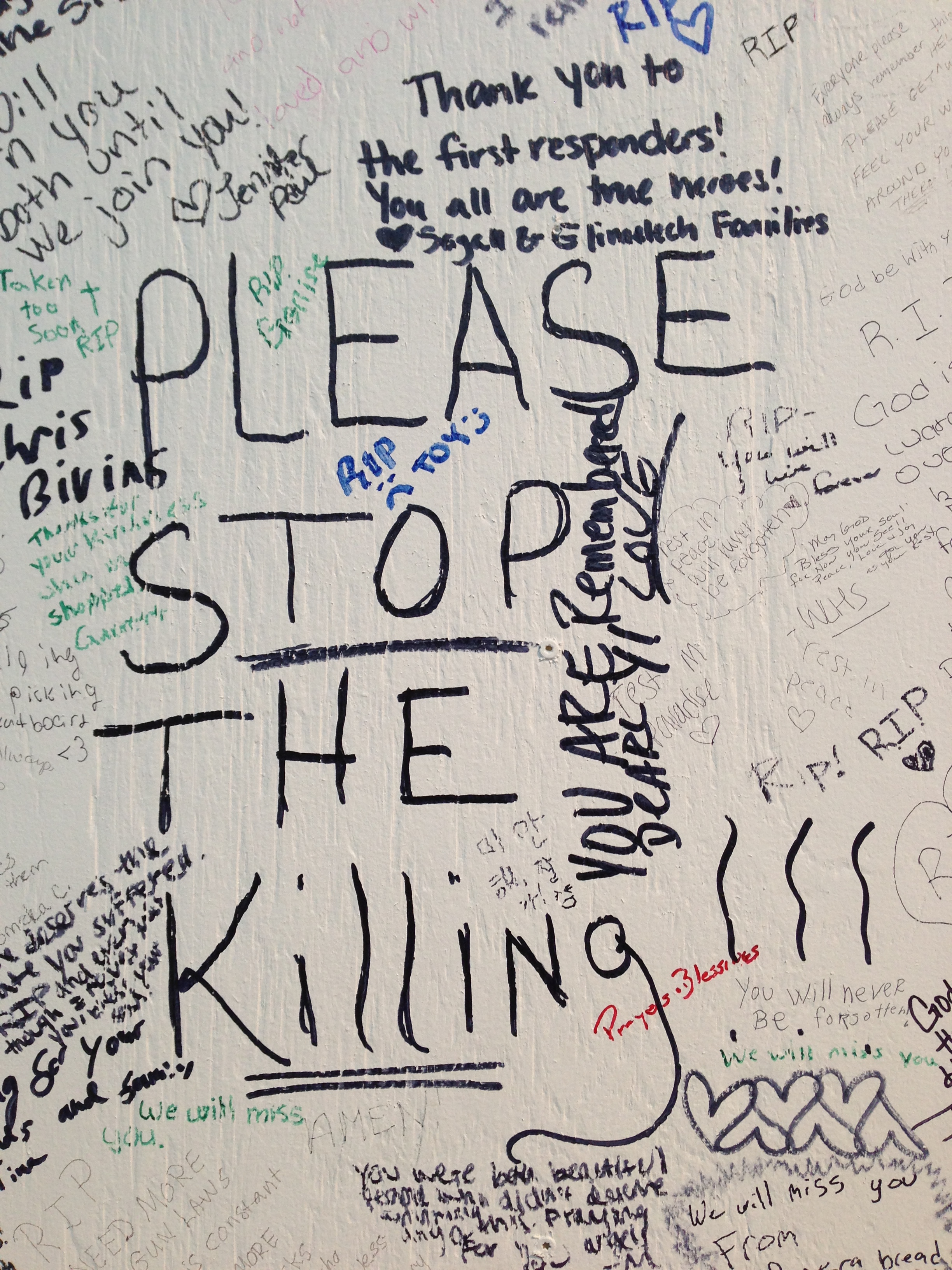
These photos were taken of an impromptu memorial at the Zumiez store where the events on January 25 occurred.

IMG_3713

IMG_3718

IMG_3714

Brianna Benlolo, Tyler Johnson, and Darion Aguilar: I pray that your souls may find peace and that your loved ones may find solace as they survive your loss.

A Christmas Post

This is going to be an unusual post for me: deeply personal, painful, and unedited.

Around this time of year, talking heads on television have a lot to say about what Christmas is, what Christmas should be, and what Christmas is not. Many of them are angry — no, outraged — over how others celebrate their holiday.

Christmas should be about CHRIST, these angry faces argue. Which means that in our words, and in our decorations, and in everything we do outwardly, we should be focusing fully on CHRISTmas. They make definitive assertions about Santa and Jesus and behind everything is an attitude of scathing contempt for people who celebrate Christ’s birth differently from them.

In the midst of this anger are people like me: people for whom Christmas is a season of anxiety, excitement, and bittersweet memories.

I have a hard time at Christmas. It has always been my favorite holiday. I have so many treasured memories of the season. And now that I have children of my own, there is even more joy to savor and celebrate. I look forward to it every year.

I also dread it every year. Because Christmas is also the season when my mother, and later my uncle, died of cancer. So along with the memories of happy Christmases past, I have the memory of myself, 11 years old, praying fervently, desperately, that my mom would be out of the hospital to celebrate Christmas with us.

I have the memory of myself a few days later, on Christmas day, in bed with my mother, who had just been released from the hospital, not because she was healthy, but because there was nothing left to do. She was in hospice care.

I have the memory of myself giving her a $5 vial of drugstore perfume, because an 11-year-old has no idea of what impending death really, truly means.

I have the memory of the last time I spoke to my her, the day after that Christmas, but I have no memory of what she said. I remember her coma, her suffering, and her death, which happened on a Sunday, January 6, just after my family returned from the Mass celebrating the Epiphany. My prayers had been answered; she was with us for Christmas, through to its very end. But my grief was nevertheless unfathomable.

It has been 23 years since that last Christmas with my mother and the grief is still there. It has changed and matured and is no longer as incapacitating as it once was. But it lingers, and at times it hits me like a punch in the stomach. I still hide in bathrooms to cry.

So you can imagine how, with all these mixed emotions coursing through my mind, I’m a little on edge at Christmas. Just a little… jumpy, if not actually constantly on the brink of a nervous breakdown.

You can also imagine my feelings when, upon tuning into the Daily Show for some much-needed laughter, I see people who, in the spirit of keeping Christ in Christmas are genuinely, thoroughly infuriated at the idea of a holiday tree in a public square or a tongue-in-cheek Festivus pole near a nativity scene.

Really? You are asking me, as an expression of my true faith in Christ, to be angry about decorations? You want me to be annoyed when people wish me Happy Holidays, and to limit my own greetings to an emphatic Merry Christmas? You want me to call legislators about how they refer to the decorated trees in their cities and you want me to complain when retailers don’t feature life-sized nativity scenes in their Christmas displays? And you want me to do these things because THAT is how we keep Christ in Christmas?

No, thank you. Christmas is hard enough for me. It’s hard enough for many, many other people for whom the holidays are a time that reminds them of their own losses, their failures, their regrets. I’m not going to get angry about how other people celebrate (or don’t celebrate) the birth of a Savior. And I’m not going to get angry at the anger.

Here’s what I am going to do, to keep Christ in Christmas: I am going to ask everyone who reads this to walk away from the anger and the criticism and the so-called culture war over what our Christian faith truly means.  I am going to ask you to remember all of us who are broken or hurting or empty this Christmas. But above all, I am going to breathe through my feelings of joy, anticipation, regret, and pain and I am going to remember that a Child was born and that he was the Prince of Peace.

She was pretty damn special.

She was pretty damn special.

When I Grow Up

When I grow up and I get my own room, by which I mean when my kids finally stick my old, sick, complaining self into the nursing home, this tree will live in it forever. I will decorate it only with fairy lights and unicorns and sparkly ribbons, and it will make me happy.

I made this picture extra large so you can fully appreciate this magnificent tree's awesomeness.

I made this picture extra large so you can fully appreciate this magnificent tree’s awesomeness.

This isn’t just some wild fancy of mine — it’s actually a brilliant plan that is at least as important as ensuring that I will be able to pay for the nursing home while I am there.

In my childhood, just one look at a rainbow Christmas tree covered with unicorns would have been like achieving Nirvana. All my fires of desire would have been extinguished. And if old age is really just a return to a childlike state, as so many people say it is, then what could make me happier than living out the rest of my days basking in the fairy-lit glow of my childhood’s grandest dream?

My rainbow and unicorn tree will also make interactions with the nursing home staff more pleasant. For them, at least. Because the fanciful cheerfulness of a tree like this one will undoubtedly make it slightly more bearable for them to change my adult diapers while listening to me expound on the status of my prolapsed uterus. And yes, I know, there are actually people who do not love unicorns and rainbows. To them, I will seem like a strange old bat who is just barely on the flip side of crazy and they will tread lightly around me out of the simple fear that they will push me over that edge.

I will always have visitors, too, because let’s face it: who wouldn’t want to come see the dotty old lady who lives year round with a unicorn-festooned Christmas tree? I would probably even get written up in the local newspaper, which would elevate me to the pinnacle of successful senior-citizenhood: The status of one who can tote a laminated newspaper article about herself, with its accompanying photograph, everywhere she goes. And if I am able to assume this most coveted of roles, I will be sure to bring my treasure, in its manila envelope, to every single appointment with my myriad of doctors, feigning forgetfulness when I show it to them time and time again.

I think I may have put to rest all of my worries about old age. I mean, who needs wills, or financial advisors, or nerve pills, or diabetic support socks when there are novelty Christmas trees and nursing home fame.

***

Note: All senior citizen stereotypes are based on my dear, quirky, and greatly missed grandmothers.

When It Snows Below the Mason Dixon Line

My plans for this week were simple: 1. To clean. 2. To wrap Christmas presents. I find that if I keep my goals pathetically easy, I can be an incredibly efficient person. It’s amazing how that works.

But it turns out that Mother Nature has had other plans for me. She brought us Marylanders an unseasonably early set of snowstorms, which have cancelled school for two days.

Yesterday, it was wet and icy, so we had a full day stuck inside. It’s all a blur to me; the only part of the day that I really remember was my trip to my doctor’s office where I learned that I still have strep throat, despite having undergone a full course of antibiotics two weeks ago.

Today, after my new antibiotic regimen has kicked in with unusual force, I am a little more aware of my surroundings. Which is good, because a second snow day with a 2-year-old and a 5-year-old who are both crushed that they couldn’t go to school requires a LOT of energy.

By 9:30, I was questioning my life choices. It’s now 4:42 pm, and this is the run down of how my day has gone:

Rooms cleaned: 0
Rooms made even messier: Every single one.
Gifts wrapped: 0
Time outs: 12. At least.
Labor-intensive Christmas crafts: 4.
Craft-related meltdowns: 4.
Sibling fights: I stopped counting.
Tears: Seriously, who can count that high?
Shattered glasses: 1.
TV shows: Um, 8?
Princess movies: 1.
Snowmen: 1.
Walks through the wintery woods: 1.
Rocks thrown in the stream: lots.
Faceplants into the stream: 1.
Children carried home crying: 1.
Wet, muddy children: 2.
Soaked items of clothing: 10.
Epic meltdowns related to the usage of stickers: 1.
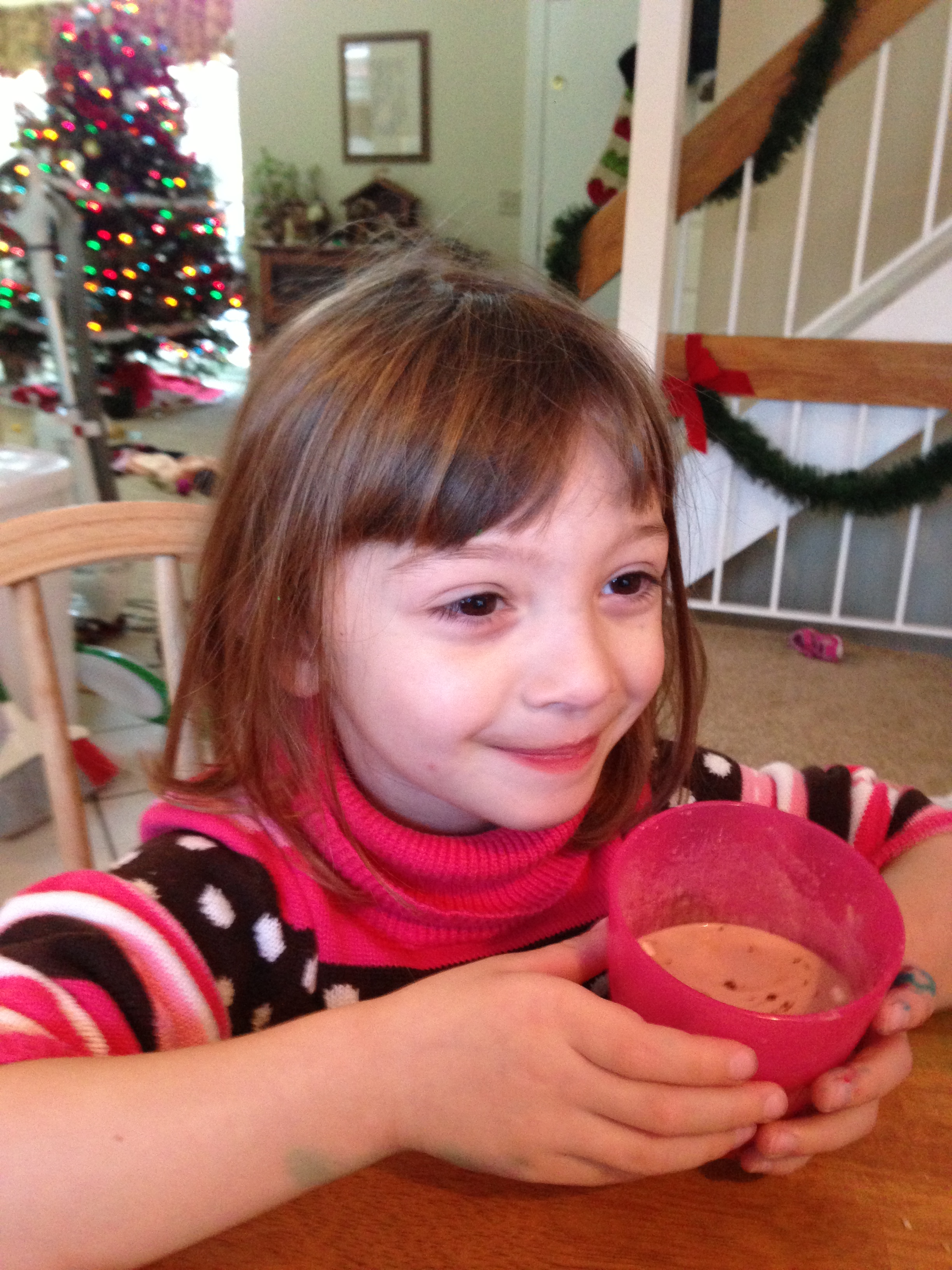
Cups of cocoa thrown on the floor: 1.
Number of times a kid told me she was sooo happy: 4.
Worth it? Yes.
The number of prayers I will say tonight begging God that schools be open tomorrow: I’m going to start now and never stop.

It’s been a long day. Luckily, the roads are cleared enough for my husband to go out for pizza. Which he will be doing. Even if he has to walk. Seriously, I mean it.

There were also some precious moments, and I was fortunate to be able to catch many of them on camera for all the world (or the 5-ish people who read this blog) to see.

IMG_3324

IMG_3328

IMG_3330

IMG_3344

IMG_3357

IMG_3363

IMG_3364

Trotting Turkeys

This is *not* what I looked like

Last week, I volunteered at my daughter’s elementary school turkey trot. All of the 400-plus students in her school participated, from Kindergarten to fifth grade. The fourth and fifth grades were expected to run a full mile, which meant they had to make four long laps around the baseball fields behind their school. Third grade ran three laps, second and first grades ran two, and the kindergarteners only had to run one.  The girls ran first, and then the boys.

I was stationed way out at the third corner of the makeshift track. My job was to motivate the students and to keep them from cheating by cutting across the baseball field backstop.

I was away from the main action, with the starting line not even within shouting distance. I wasn’t recording time or congratulating the kids as they passed the finish line. But even though I wasn’t in the thick of things, I was in the perfect position to observe. And as an observer, I noticed some interesting things.

First of all, 9- and 10-year-olds excel at making it absolutely clear when they do NOT want to do something. They thrive in situations that give them the power to do this passive-aggressively, and they (silently) rejoice when the planets align and they can passive-aggressively display their supreme disinterest while also managing to exert some level of control over the adults in their lives. And in an elementary school turkey trot, boy, do those planets align.

I called these kids the “walkers with attitude.” These were the kids who Were. Not. Running. It was enough that they condescended to stroll, slowly, and in groups. But run? Oh, no. Oh no, no, no.

Let me tell you, it is painful to stand in the corner of a field on a cold fall morning and watch a group of kids amble at a snail’s pace over a 1 mile course. Painful. After almost 20 minutes, when the slowest of the slow were still only on their second lap, I’d had enough. I started to run. I ran up to them as they approached me, and I made them run with me for about a 100 yard stretch. Then I would run up to the next group, and escort them. This strategy was actually more effective than you might expect, and I even got some smiles from kids as they approached me saying to their friends, “ok, we HAVE to run here.”

Still, there were a few who weren’t having it. And oh, the looks they gave me. I don’t envy our teachers.

Then there were the runners. These kids were impressive.  Where the other kids started off sprinting, they paced themselves. They ran consistently and intelligently and showed a level of discipline that I, who have always loved to run, didn’t understand until I was in high school. The most memorable of these students was a 5th grade girl who could teach much older, and much more experienced, runners a few things. She was so good that, out of all 6 grades, she was the only girl who had ALL the boys in her class cheering for her.

Which brings us to the helpers. The girls. The girls who danced and cheered for the boys who were running. The girls who slowed down so their friend with asthma didn’t have to walk alone. The girls who turned around when they were finished to walk with their friend with Down Syndrome, who needed someone to hold her hand.

These were the girls who brought out my feminist ambivalence. The girls who made me WANT to shout “You don’t HAVE to do this! That’s why I am
here! Run your own race! You can be fast and powerful! RUN!” But who, instead, made me feel proud and hopeful in the knowledge that the helpers of the future, the people who will keep our world together, are growing up to be exactly what we need the most.

If the walkers and the runners and the helpers are the groups who stood out the most to me, there were two individual students who I will remember above all: the smeller of roses and the cheetah.

The smeller of roses was a kindergartener who came in dead last. (Just after my own daughter, the talker, who took advantage of the situation to hold her teacher’s hand and chat. But that’s another story.) This little girl started off walking, and walked the whole way. She was totally unmoved by peer pressure. Unlike the older kids, she wasn’t walking to prove anything. She was walking because it was a nice afternoon and there were things to look at. Things like the pale pink bead she found and showed me after the race. While the other kids were taking advantage of some post-race playground time, this little girl was proudly telling me about the beautiful treasure she had found during her walk around the field.

And then there was my cheetah. My fourth-grade friend who came up to my post walking, with “attitude” written all over his face. But as he came closer, I noticed that despite the stony expression on his face, he was crying.

I asked him if I could run with him, but his response was a hard NO. No, he would not run. He hated the turkey trot. He always came in last. I tried telling him that of course he would come in last if he didn’t at least try to run. He wasn’t having it. The tears continued to stream down his face.

His anger and frustration and tears continued to his very last lap, when finally another mother and I walked with him, to encourage him to run at least the last 100 yards of the race. We tried to get him talking, to get him to focus on something positive rather than the negative feelings he was experiencing at that moment.  After a few minutes of denying interest in any topic whatsoever, he finally broke down. “I like The Wild Kratts. And I like cheetahs. When I run, I want to feel like a cheetah. But I don’t. I don’t feel like a cheetah. I’m too slow. So I don’t  run. I can’t run.”

So the other mom and I each took one of his hands, and instead of running like cheetahs, we ran like turkeys. And all three of us crossed the finish line running.

Baby, I’m Back

I have been away for the last couple of weeks, but I have a really good reason: My husband and I decided to get new carpet in our basement.

Wait, you mean getting new carpet in one room on one level of one house isn’t really all that time consuming? I suppose it isn’t, unless you are me. In which case, getting new carpet in the basement really means getting new carpet throughout the entire house, closets included, painting three rooms, and getting new furniture. Because I am unable to do anything in moderation.

In all fairness, it was a logical sequence of events. Replacing the basement carpet became a necessity when we realized that the stains I had begun to think of as poltergeist footprints because no amount of carpet spray or steam cleaning could remove them  were actually from mold.

Our one-room basement is where our kids play, and since most of their play involves rolling around on the floor, we thought it probably wasn’t the best thing for their health if they were rubbing their faces in a moldy carpet. So it had to go.

This is where things started to snowball. Our old carpets were a lovely shade of ivory. When the single gentleman with one indoor cat who previously owned our house sold it to us, they were pristine. They were beautiful.

However, the seven years of our ownership have not treated those carpets well. We live in the woods. We have two small, messy children. We have a dog who likes to eat grass and then come inside and vomit it up. I have burned hundreds of thousands of calories over the years scrubbing and steam-cleaning all of the inevitable stains, but the dirt was decisively winning the battle.

So if we were replacing the moldy basement carpets, it only stood to reason for us to replace the stained main floor carpets. And if we replaced those, we had to replace the carpet on our stairs to match, because, come on, how tacky would it be to have the stairs in a different color carpet? And if we replaced the carpet on our stairs, we had to replace the carpets on the top floor as well.

And since we would be getting new carpets, what better time to repair all the damage to our walls from the installation and abuse of baby gates? And since our old reclining sofa and loveseat had left black marks on our carpet, we had to replace those as well, right?

And so on, until I had devoted myself to the cause of re-carpeting, repainting, and refurnishing significant portions of our home.  With a two year old. While also working on two freelance projects. WITH A TWO-YEAR-OLD. After which, I planned a Halloween party with 10 kids 5 and under. I never said I was bright.

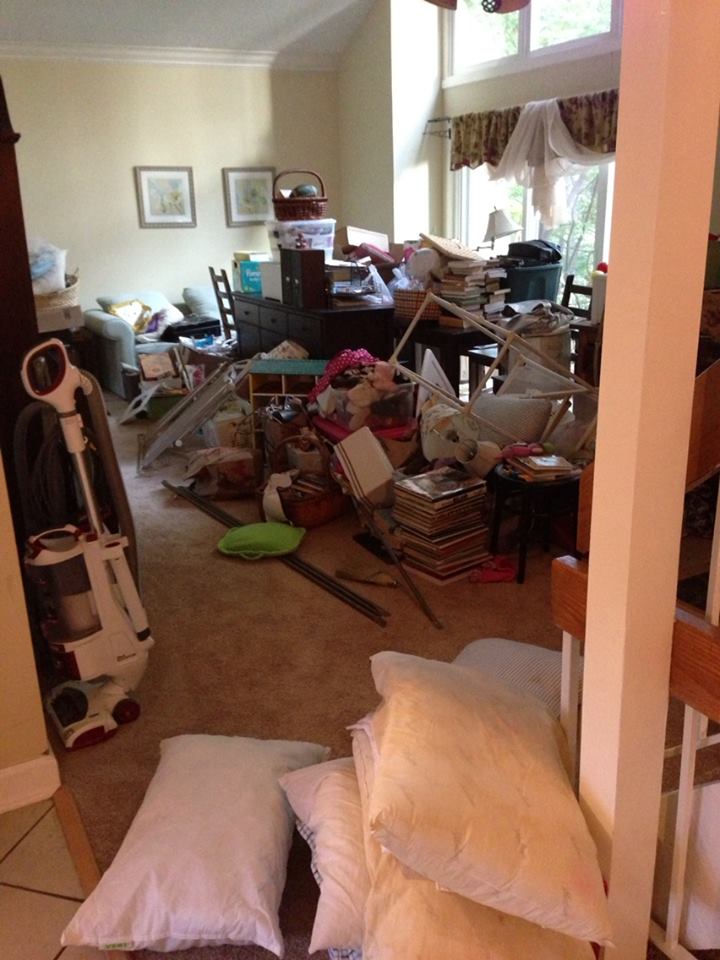
By the end of the installation, on a Tuesday evening at approximately 5:20, our house looked like this:

Quoth the husband, without irony: "Yeah, it shouldn't take long at all to get the house back in order."

Quoth the husband, without irony: “Yeah, it shouldn’t take long at all to get the house back in order.”

And this:

Family Room

And yes, the furniture that was supposed to arrive between 2-6 pm, but which has not arrived as of 5:18, will be coming in boxes and without slipcovers a la Ikea. Totally wasn’t a problem…

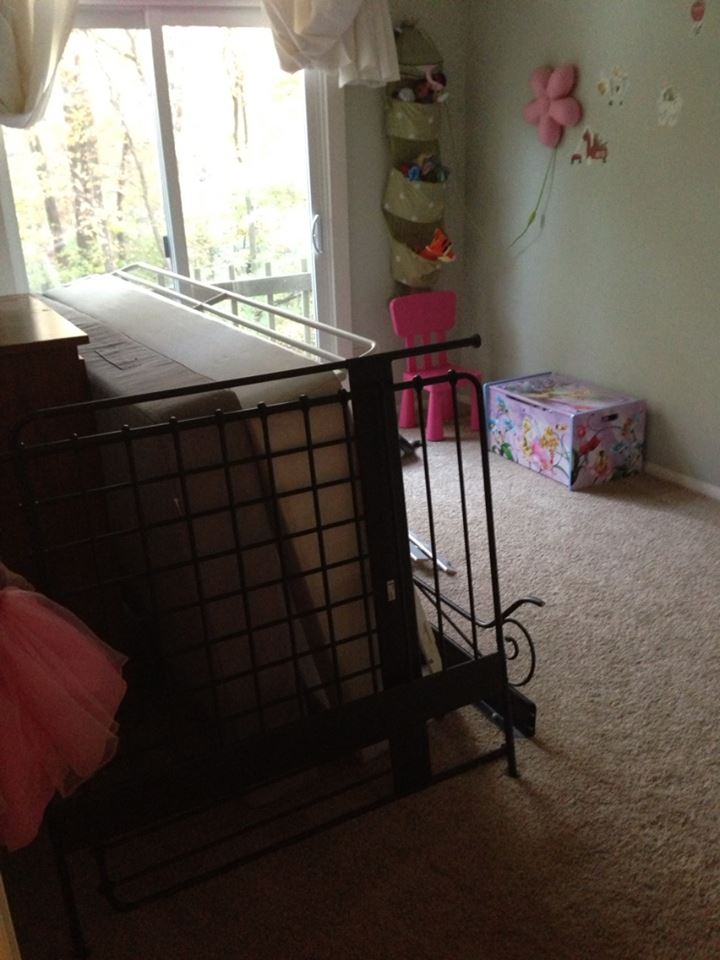
And this:

Micheles Room

Why yes, that is the dismantled bed of our five-year-old. Why would it be a problem that it still wasn’t put together by her bedtime?

But now everything is back to normal. And having accomplished this massive project mostly on my own, I feel pretty good about myself. In fact, I think I now understand why so many men enjoy home improvement projects so much: It makes you feel powerful and skillful and gives you a sense of having snagged a corner of the American dream.

Now I’m going to go sit on the couch and watch some pay-per-view wrestling with a beer in one hand and the other stuck in the top of my pants. Just kidding. I’m going to eat some chocolate and read a nice cozy mystery. And then maybe I will lay down on my brand new, brown, stain-hiding carpet, and pretend I’m at the beach.

T-23 Hours

It’s 10:00 am on Friday, October 11. By this time tomorrow, I will be 15 minutes into my first half-marathon race.

I have spent the last five months preparing for this event at the Baltimore Running Festival and now my training is officially over. I ran my practice 13.1 miles three weeks ago, and I did it with minimal suffering. Two weeks ago, I set a long-distance personal record in a 9.3 mile race, and then I did it again in my final training run.

I’ve spent the last few days stuffing myself with carbs and protein. I’m hydrated to the point where I have had to bring up the savant-like mental map of local public restrooms that I developed during my pregnancies. My iTunes playlist is almost complete.

I have my race bib, my energy drink coupons and freebies, and my all-important (neon green) race tee shirt.

And yesterday afternoon, I completed my final prerace workout, a gentle, core-stretching and -strengthening session of Pilates. Oddly enough, after 5 months of some pretty challenging runs, it was this last, non-running workout that served as the best reminder of my most necessary race-day accessory: a strong, focused mind.

Actually, I suppose this reminder really came courtesy of my children, who were both home and awake when I finally got a chance to squeeze the workout in.

While my five-year-old yelled questions down to me from her bedroom upstairs, my two-year-old was busy helping me get the most out of my exercising. She started by adding extra weight to my moves — she sat on my back while I was trying to plank and on my legs when I was trying to lift them. When that got boring, she sat on my head.

Then, she must have decided I wasn’t properly accessorized for my workout because she brought a cowgirl hat for my head and a necklace for my arm. After that, she turned her efforts to ensuring I was properly entertained, hauling a bag of board books over to me and dropping each one on my chest.

Finally, she asked for an apple, which bought me a few minutes of peaceful core crunching before she climbed out of her booster seat and came over to deposit some “gis-gusting” apple skin on my face.

Through all of this, I somehow managed to keep the important part of my  brain focused on my workout. I isolated muscles and maintained (mostly) proper form. Moreover, I successfully ignored the best efforts of a two-year-old to distract me from my purpose. Talk about the eye of the tiger — I was the eye of the hurricane. Or something like that.

This is why we moms are so good at endurance events. We’ve done pregnancy. We’ve done labor. We’ve done hours of pacing with colicky newborns. We’ve done endless playing with annoying musical toys. We’ve done Barney and Caillou. We can ignore the toddler human, which is possibly the most annoying force on the planet. If we can get through all that, we can fly through a couple of hours of running.

Race day is almost here, and I’m feeling good. My body is strong; my mind is stronger. I’ve got this.

Playing Horsie

Most of my recent posts have had to do with my two-year-old, who has been in an especially uncooperative mood recently. For at least the last week, nearly every suggestion I have made to her has resulted in her giving me the evil eye and screaming “NO! DAT’S GIS-GUSTING!” It’s been old since the first time she said it.

So you can imagine my surprise — and my joy — when, while we were playing horses a few nights ago, she actually agreed  to do something I asked her to do.

The conversation went like this:

Me (in a falsetto): Neeeiiiggh, baby horsie! It’s time to get yer PJ’s on, neigh, neigh!
Her: Neeeiiiggh, mama horsie, OK, neigh, neigh!

And then she lay down on the floor and let me put her pajamas on… including the pants!

It was miraculous. The rest of our interactions that night went beautifully. She neighed and galloped cheerfully up to bed. The next morning, she ate her horsie breakfast without complaint. She didn’t run away — not once! — when I was dressing her in her horsie shirt and her horsie pants and her horsie socks and shoes. She even let me brush her horsie mane of hair. I was overjoyed.

The only downside, of course, is that I have had to assume my horsie persona in all of my interactions with her.  Which means that when we were checking out at the Target yesterday and she started climbing out of the cart, I broke out my falsetto and loudly said, “NEIGH, NEIGH baby horsie! Get back in that cart, NEIGH, NEIGH.”

Oh yes I did. And it was totally worth it.